If you are looking for ways to grow closer to God, you may be starting from a place of longing rather than confidence. Perhaps prayer has become hurried, Sunday Mass feels familiar but distant, or you are returning to Catholic life after time away. You may believe in God and still wonder how that belief should shape an ordinary Tuesday.
In this article
Catholic spiritual growth begins with God’s initiative. His grace draws us toward him; our habits are a response, not a way to purchase his love (Catechism of the Catholic Church, 1996–2001). The aim is communion with the Father through Jesus Christ in the Holy Spirit, expressed in faith, worship, repentance, and love of neighbor.
The ten practices below belong together. Some, especially participation in the sacraments, are central to Catholic life; others are helpful devotions that can take different forms. You do not need to adopt everything at once. Begin with one manageable change, while keeping the Church’s sacramental life at the center.
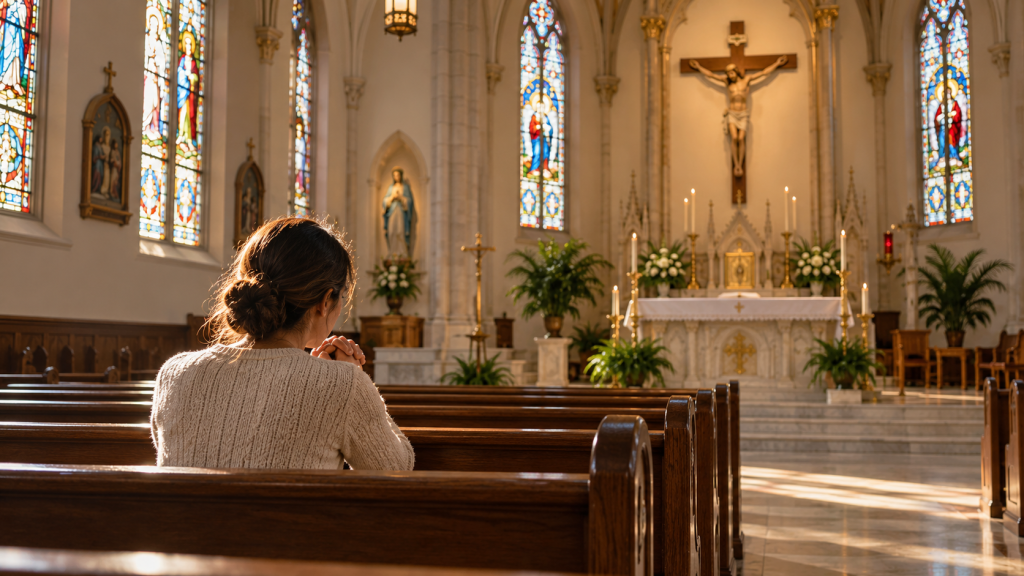
1. Make Time for Daily Prayer
A relationship needs attention. Daily prayer gives you a deliberate opportunity to turn toward God instead of leaving him whatever time remains. The Catechism’s teaching on the life of prayer recommends regular rhythms that sustain an ongoing remembrance of God (2697–2699).
Start with five minutes at a time you can usually keep: before checking your phone, during a quiet lunch break, or after the children are asleep. Make the Sign of the Cross, thank God for one gift, name what is on your heart, and ask for help with one responsibility. Leave a little silence rather than trying to fill every second.
If words are difficult, pray the Our Father slowly, one petition at a time. Pause over the request that touches your life today. If your attention wanders, gently return without treating distraction as a personal defeat.
Our daily Catholic prayer routine offers a practical structure. Choose something sustainable before adding more. Five minutes is a starting point, not a ceiling on your relationship with God.
2. Attend Mass and Participate Fully
The Mass is more than a weekly source of inspiration. The Church gathers to hear God’s Word and participate in Christ’s sacrificial offering; Catholics receive Christ himself in the Eucharist. The Catechism calls the Eucharist central to Christian life (1324) and teaches Christ’s true, real, and substantial presence (1374).
Catholics are obliged to participate in Mass on Sundays and holy days of obligation unless excused by a serious reason or dispensed (Catechism, 2181). Illness or necessary care of another person can be serious reasons. If your circumstances are complicated, ask your parish for guidance instead of guessing or withdrawing from parish life.
Participating fully includes listening, making the responses, singing when appropriate, offering your intentions, and joining your heart to the liturgy. Read our step-by-step explanation of Catholic Mass if its structure is unfamiliar. Arriving a few minutes early can help you settle and notice what you are celebrating.
Receive Holy Communion with the preparation the Church requires; the USCCB’s guidelines for Communion explain the relevant discipline. If you are not ready to receive, you can still attend Mass and pray. Our guide to the Eucharist and the Real Presence can deepen your understanding.
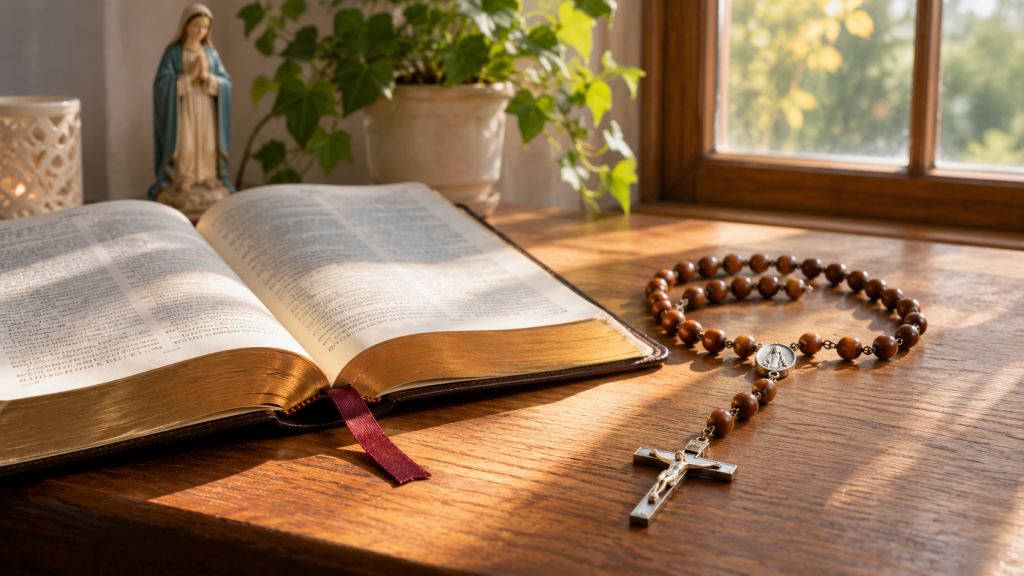
3. Read and Reflect on Sacred Scripture
God’s Word gives substance to prayer. Without it, we can end up speaking mainly to our own assumptions about God. In John 15:4–5, Jesus describes the disciple’s dependence on him through the image of a branch remaining in the vine. The Christian life grows from that relationship rather than from self-sufficiency.
Begin with a short passage from a Gospel, perhaps the reading for the coming Sunday. Read it once to understand what happens, then again more slowly. Notice what Jesus says or does. Ask what the passage reveals about him before asking what it says about you.
Respond with a simple prayer. If you read about Jesus welcoming someone who is overlooked, you might ask for the grace to notice a lonely colleague. Keep the passage’s context in view; a phrase that attracts your attention is not automatically a private prediction or instruction about a major decision.
This prayerful reading can develop into lectio divina, a traditional way of praying with Scripture. You do not need to finish a chapter to benefit. A few verses read thoughtfully can give you something to return to throughout the day. Write down one sentence and one practical response.
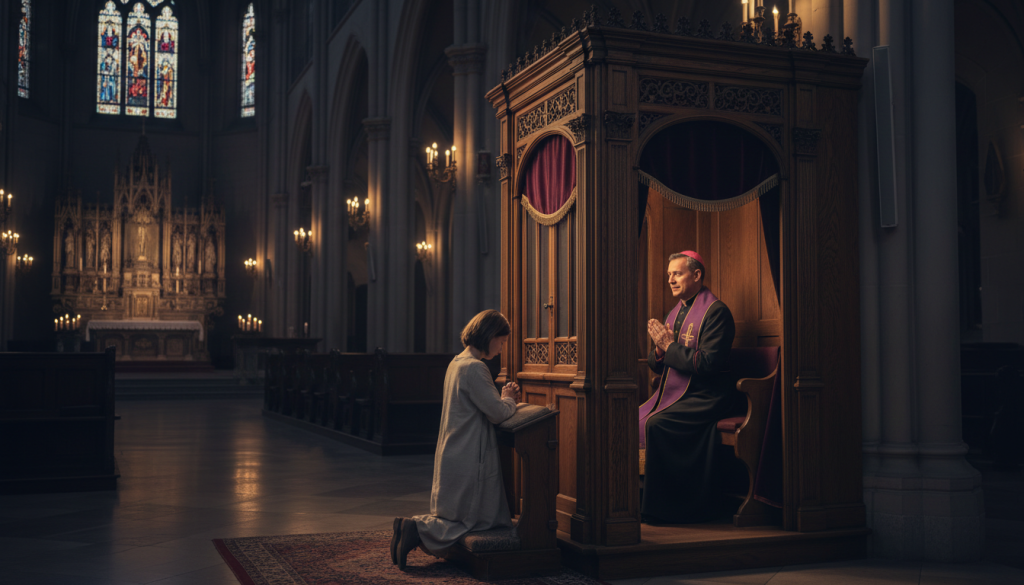
4. Receive the Sacrament of Reconciliation
Sin damages our communion with God and other people. Confession brings that reality into the light of Christ’s mercy. Through the priest’s ministry, the properly disposed penitent receives sacramental absolution and reconciliation with God and the Church. Regular confession can also help you recognize recurring patterns and respond to grace more honestly.
Preparation includes examining your conscience, being sorry for sin, and sincerely intending to change. A firm purpose of amendment does not mean predicting that you will never fall again. It means turning away from sin now and taking reasonable steps to avoid it, rather than planning to continue it unchanged.
If you have been away, our Catholic Confession guide explains what to say and how to prepare. Tell the priest that you need help. You do not have to deliver a polished speech or remember every customary phrase.
The Act of Contrition expresses sorrow and a resolve to amend your life. It can support daily repentance, but simply reciting words does not automatically forgive mortal sin. Follow your confessor’s guidance, complete your penance, and make restitution where possible. Receive mercy as an invitation to live differently.
5. Spend Time in Eucharistic Adoration
Eucharistic Adoration is prayer before Jesus Christ present in the Blessed Sacrament. It flows from the Church’s belief in the Real Presence. The Eucharist may be exposed in a monstrance, or you may pray before the tabernacle where the sacrament is reserved.
Check a parish’s opening hours or adoration schedule. For your first visit, ten or fifteen minutes may be a sensible beginning. Greet the Lord, bring an intention, read a Gospel passage, or remain quietly with him. You do not need to produce a moving experience to make the visit worthwhile.
Our beginner’s guide to Eucharistic Adoration explains what to expect. Follow the parish’s arrangements, especially if you have signed up for a scheduled hour. Adoration supports participation in Mass; it does not replace Sunday worship.
If silence feels unfamiliar, return to a short prayer such as, “Jesus, help me be attentive to you.” Notice distractions without following every one. The purpose is to spend time with Christ, not to prove that you can maintain perfect concentration.
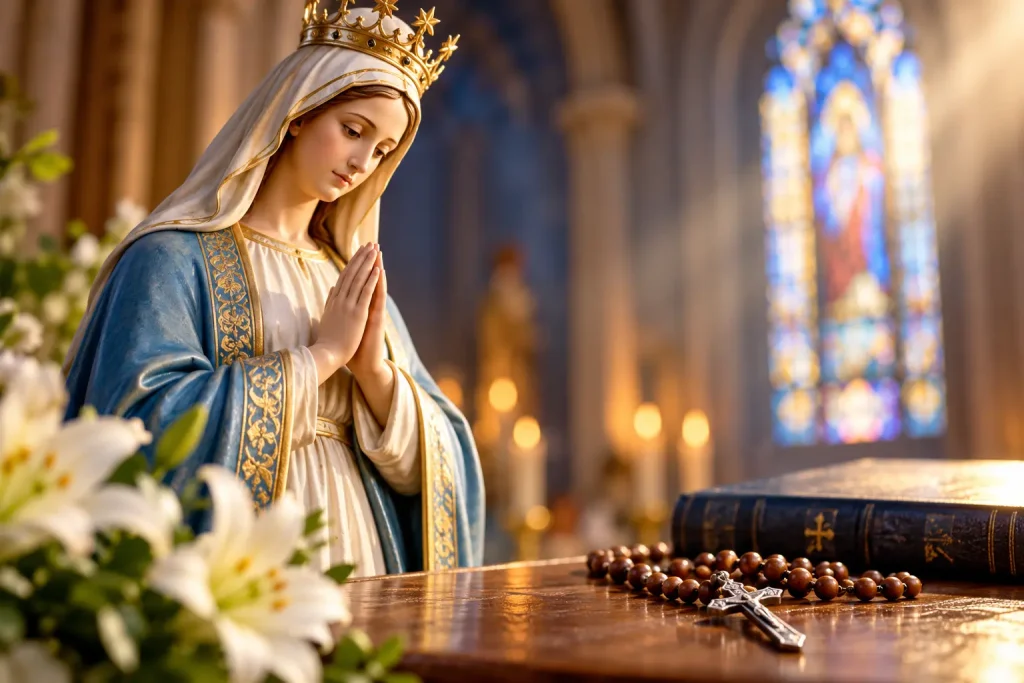
6. Pray the Rosary and Seek Mary’s Intercession
The Rosary combines repeated prayer with meditation on the life of Christ. In Rosarium Virginis Mariae, Saint John Paul II explains its deeply Christ-centered character. Catholics ask Mary to intercede for them; the worship owed to God is not offered to Mary.
At Cana, Mary directs the servants toward what Jesus asks of them (John 2:5). That is a helpful perspective for Marian devotion: learning attentiveness to her Son. As you pray a mystery, consider a particular event in his life rather than treating the number of prayers as an achievement.
You can begin with one decade. Announce the mystery, read a related Gospel verse if helpful, and pray without rushing. Our Rosary guide walks through the prayers and mysteries.
The Rosary is a cherished devotion, not a universal requirement to pray every day. It should not become a measure by which you condemn someone else’s spiritual life. If another approved form of prayer helps you attend to Christ, you can discuss a balanced prayer life with a priest or spiritual director.
7. Practice Gratitude and Recognize God’s Presence
Gratitude helps us receive life as a gift rather than viewing everything through what is missing. Saint Paul joins prayer and thanksgiving in 1 Thessalonians 5:16–18. Giving thanks in difficult circumstances does not require calling evil good, suppressing grief, or pretending that suffering does not hurt.
At the end of the day, name three particular gifts: someone who listened, the strength to complete a difficult duty, or a moment of unexpected beauty. Be specific. Then thank God for them and consider whether gratitude calls for a response, such as thanking a person or sharing what you have.
You can also pause before a meal or at the start of a journey. Ordinary moments become occasions for remembering God. Recognizing his providence does not mean interpreting every coincidence as a hidden message; it means learning to live with trust and attention.
On a hard day, your prayer may be very simple: “Thank you for the person who helped me today. Help me receive that kindness.” Gratitude and honest lament can belong in the same prayer.
8. Serve Others Through Acts of Charity
Love of God takes visible form in love of neighbor. In Matthew 25:35–40, Jesus identifies himself with those in need. Catholic faith therefore draws us beyond private spiritual improvement toward concrete care for other people.
The Church’s corporal and spiritual works of mercy include meeting bodily needs and offering spiritual help. Feeding someone who is hungry, visiting someone who is sick, comforting a grieving friend, and praying for others are all practical expressions of charity.
Choose a need you can actually meet. Arrange a recurring food-pantry donation, take a meal to a neighbor, offer a ride, or set aside time to listen without checking your phone. Parish ministries can connect your willingness to serve with people and safeguards already in place.
Respect the dignity and privacy of the person you help. Service is not material for displaying your virtue. Forgiveness also belongs to Christian charity, but it does not require denying wrongdoing or abandoning appropriate safety boundaries. Ask God to show you the next loving and just action, including an apology or restitution when you caused harm.
9. Learn More About the Catholic Faith
Questions can become an invitation to learn rather than a reason to stand at a distance. Understanding the Creed, sacraments, moral life, and prayer gives you a clearer picture of the faith you are trying to live. Learning can correct both harsh misconceptions about God and comforting ideas that do not reflect Catholic teaching.
Set aside ten minutes a few times a week for a manageable subject. Read a short section of the Catechism, discuss the Sunday readings with a parish group, or learn about a saint whose life differs from your own. Look for how belief shaped that person’s choices, not simply extraordinary events.
When choosing online material, prefer sources that distinguish Church teaching from personal opinion. Check a difficult question with a parish priest or qualified catechist. Our Catholic prayers collection can help you explore the meaning of familiar prayers instead of merely memorizing their sounds.
Let study lead back to prayer and action. After reading about mercy, pray for someone you find difficult. After learning about the Eucharist, prepare more attentively for Mass. Knowledge serves communion with God and neighbor; winning an argument is not the measure of spiritual maturity.
10. Trust God’s Timing and Remain Faithful
A stronger relationship with God does not always feel more intense. You may experience distraction, discouragement, or spiritual dryness even while sincerely trying to pray. The Catechism addresses these difficulties in prayer, including dryness (2729–2731).
Do not conclude from a difficult week that God has rejected you. At the same time, do not use “God’s timing” to avoid a responsibility you already recognize. Trust includes acting faithfully in the present: keeping a promise, seeking forgiveness, asking for guidance, and returning to prayer.
When prayer feels dry, simplify rather than making desperate bargains. Keep a realistic time of prayer, continue the sacramental life, and speak honestly to God about your experience. A priest or spiritual director can help you discern what needs attention. Exhaustion, grief, or demanding responsibilities should not be dismissed as evidence of weak faith.
Look for growth in patience, honesty, generosity, and willingness to repent, without turning these into another scorecard. No devotional schedule guarantees relief from suffering or a particular answer to prayer. Christian hope rests in God’s faithfulness, and learning to receive his love is a lifelong journey.
A Simple 7-Day Plan to Grow Closer to God
Keep one brief daily prayer time throughout this week. The additional action each day is an invitation, not a test. Adapt it to your responsibilities and arrange Mass and Confession according to the parish schedule.
- Day 1 — Make room: Choose a regular five-minute prayer time. Put it in your calendar and pray the Our Father slowly.
- Day 2 — Listen: Read John 15:1–11. Spend five minutes with one verse, then ask how you can respond today.
- Day 3 — Examine: Review your choices prayerfully. Make an Act of Contrition and check confession times; arrange a visit if needed.
- Day 4 — Give thanks: Write down three specific gifts. Thank someone whose kindness you might otherwise overlook.
- Day 5 — Serve: Complete one practical work of mercy. Choose something useful to the other person rather than impressive to you.
- Day 6 — Pray with Mary: Pray one decade of the Rosary, keeping the mystery in mind. Alternatively, spend quiet time with a Gospel scene.
- Day 7 — Gather and review: Review the week and choose one habit to continue. Participate in Sunday Mass whenever Sunday falls during this plan; an appropriate anticipated Mass also fulfills the obligation.
If a day goes badly, resume the next day. You do not need to restart the whole week or add extra prayers as a penalty. This plan helps establish a beginning, not a deadline by which you must feel spiritually different.
Frequently Asked Questions
How can I feel closer to God every day?
Give God a regular time of prayer, listen to Scripture, and practice charity in your actual circumstances. These help you respond to him, but feelings vary. A day of faithful prayer and service can matter even when it feels ordinary.
What should I do when I feel distant from God?
Tell him honestly. Consider whether you need rest, a more realistic prayer routine, repentance, or help understanding a difficulty. Return to the sacraments and speak with a priest if you are unsure how to begin. Distance in feeling is not proof of God’s absence.
Can I grow closer to God without praying for hours?
Yes. Begin with time you can faithfully give, even five minutes. Offer brief prayers during the day and let prayer influence your choices. Longer prayer may develop gradually, but you do not need a monastic timetable to begin living a serious Catholic spiritual life.
How does Confession strengthen my relationship with God?
For a properly disposed penitent, sacramental absolution forgives sins and reconciles the person with God and the Church. Confession also calls you to honest repentance and practical amendment. It is an encounter with Christ’s mercy, not simply an emotional release.
What is the best Catholic prayer for spiritual growth?
There is no single devotion that is best for everyone. The Our Father, taught by Jesus, is a foundation for Christian prayer. The Psalms, the Rosary, and prayer with Scripture can also help. Choose a sound practice you can pray attentively and consistently.
How long does it take to strengthen your relationship with God?
There is no fixed timetable or guaranteed feeling. Habits develop through repeated choices, while growth in holiness continues throughout life. Notice whether you are becoming more willing to love, repent, and trust. Avoid comparing your experience with someone else’s story.
Begin with One Faithful Step
You do not need to solve your whole spiritual life today. Protect a small time of prayer, make room for Sunday Mass, or contact the parish about returning to Confession. Let that step lead to the next, with the help of God’s grace.
The purpose of these Catholic faith habits is not to build a perfect routine around yourself. It is to receive Christ more deeply and love as his disciple in the life you have been given. Start where you are, ask for help, and keep returning.