
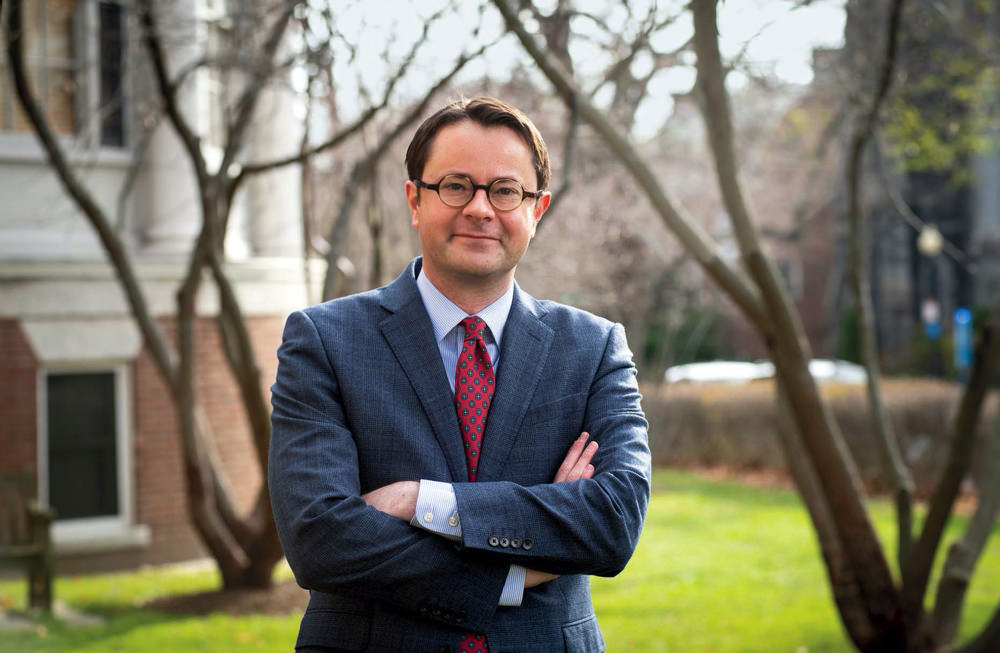
Pope Leo has appointed a distinguished Catholic scholar from Harvard University to serve as a member of the Pontifical Academy of Social Sciences, underscoring the Vatican’s enduring commitment to engaging with contemporary social issues through academic insight rooted in Catholic social teaching. This appointment highlights the Holy See’s continued effort to bring rigorous scholarship together with spiritual and ethical reflection on matters that affect the common good — from economic justice to human rights and the care of creation.
In this article, we explore who the appointee is, what the Pontifical Academy of Social Sciences (PASS) does, the broader implications of the appointment for Catholic action in the modern world, and why this matters for everyday Catholics seeking to live their faith with both prayer and understanding.
The newly appointed member is Professor Tyler J. VanderWeele, a respected academic at Harvard University with expertise in epidemiology. Known for their scholarship and commitment to Catholic ethical perspectives on social issues, Professor Vanderweele brings a depth of experience to the Pontifical Academy of Social Sciences.
Professor Vanderweele’s work — ranging from peer-reviewed articles to public lectures — has often focused on questions that sit at the intersection of human dignity and societal structures, including poverty, inequality, migration, and ethical governance. Their appointment reflects a broader trend within the Vatican to partner with scholars who can bring tested academic methodologies into constructive dialogue with the Church’s moral and spiritual teachings.
Most importantly, Vanderweele’s Catholic faith is not merely academic — it informs their approach to scholarship at every stage. By integrating a respect for human dignity into research methodologies and policy discussions, they exemplify the Church’s vision of scholarship as a form of service to humanity.
About the Pontifical Academy of Social Sciences
To understand the significance of this appointment, it’s essential to know what the Pontifical Academy of Social Sciences is and why it matters.
History and Mission
The Pontifical Academy of Social Sciences was established in 1994 by Pope St. John Paul II to serve as an advisory body to the Holy See. Its mission is to promote the study and progress of the social sciences — including economics, sociology, law, and political science — in the light of the Church’s social doctrine.
Unlike private academic societies, PASS operates with a distinct mandate: it seeks to bring scientific rigor into moral and ethical dialogue. By doing so, it helps the Church engage global challenges not only with spiritual insight but also with well-researched perspectives from the academy’s own members, who are leading scholars from around the world.
Structure and Activities
PASS comprises a group of international scholars appointed by the Pope. Members convene periodically in plenary sessions, publish research reports, and advise the pontifical offices on matters where scholarly insight and moral reflection intersect. Topics studied by the academy often include:
- Social inequality and poverty
- Migration and refugee crises
- Labor markets and employment ethics
- Environmental change and care for creation
- Human rights and the common good
- Global economic governance
In addition to academic publications, PASS frequently partners with other Vatican bodies, such as the Pontifical Council for Justice and Peace and the Dicastery for Promoting Integral Human Development, to provide research that informs wider Church teaching and initiatives.
Why This Appointment Matters
Under Pope Leo’s leadership, the Vatican has made clear that confronting the world’s most pressing social issues is not just an academic exercise — it is an expression of Catholic faith in action.
1. Engagement With Today’s Societal Challenges
In an age marked by rapid technological change, economic disruption, and migration pressures, the Church recognizes the value of academically grounded insight. Appointing a scholar from Harvard — one of the world’s leading universities — signals that the Vatican values diverse perspectives and rigorous research that can illuminate paths toward justice, human dignity, and the common good.
2. Faith and Reason in Harmony
This appointment exemplifies a longstanding Catholic principle: faith and reason are complementary. The Church does not fear scientific inquiry or academic study; rather, it invites such disciplines to align with the moral imperative of promoting human flourishing.
The Second Vatican Council emphasized this harmony when it taught that “truth, which is one, cannot contradict truth, discovered either through the light of reason or through the light of faith.” Pope Leo’s decision is a contemporary expression of this commitment — inviting scholars to join with the Church in understanding and responding to social realities.
3. Strengthening Catholic Social Teaching in Public Discourse
Catholic social teaching is rooted in principles such as:
- The dignity of the human person
- Solidarity with the poor and vulnerable
- The preferential option for the poor
- Care for creation
- The common good
By ensuring that these principles are part of the academy’s research work, the Vatican is strengthening the voice of Catholic moral and ethical reflection in conversations that shape public policy, academic discourse, and international development.
What This Means for Catholics
So why does this appointment matter beyond the Vatican walls? For everyday Catholics, it underscores that:
You Are Part of a Church That Thinks Deeply About the World
The Church’s concern for human dignity is not limited to homilies or pastoral letters — it is also reflected in its engagement with scholars who study society’s structures and systems.
Catholic Social Teaching Has Practical Application
From local parish ministries to global development initiatives, Catholic social teaching provides a framework for action in areas such as:
- Ethical labor practices
- Immigration and refugee support
- Health care access and equity
- Environmental stewardship
By integrating thoughtful research into its advisory bodies, the Vatican ensures that this teaching is not abstract but rooted in real-world insights.
Your Faith Connects to Bigger Conversations
Whether you are a student, employee, parent, or community leader, Catholic belief intersects with social realities. This appointment encourages believers to:
- Reflect on how faith shapes ethical decision-making
- Engage in informed dialogue about social issues
- Advocate for policies consistent with human dignity
The appointment of a Harvard Catholic scholar to a Vatican academy also speaks to the Church’s broader intellectual mission in the modern world. In recent decades, Catholic institutions have emphasized dialogue with culture, science, and the academy. This does not mean uncritical acceptance of prevailing ideas; rather, it reflects a commitment to engaging contemporary thought with clarity and conviction.
Catholic tradition has long valued education and scholarship. From medieval universities to modern Catholic colleges, the Church has seen intellectual formation as a vital dimension of faith. The presence of respected academics within Vatican advisory bodies continues this tradition in a globalized context. It signals that the Church does not fear rigorous inquiry, but welcomes it as a partner in the pursuit of truth.
In a cultural climate often marked by polarization, such appointments also model a way of engaging differences constructively. Scholars bring diverse perspectives and methodologies, while the Church offers a moral and spiritual framework oriented toward the common good. When these elements work together, the result can be a more nuanced and humane approach to social questions.
For Catholic readers, this is an invitation to value thoughtful engagement with ideas. Prayer and devotion remain central to the life of faith, but intellectual formation also matters. Reading widely, thinking critically, and grounding opinions in both faith and reason are part of living a mature Catholic life. This appointment reflects that broader vision: a Church that prays deeply, thinks carefully, and engages the world with confidence and compassion.