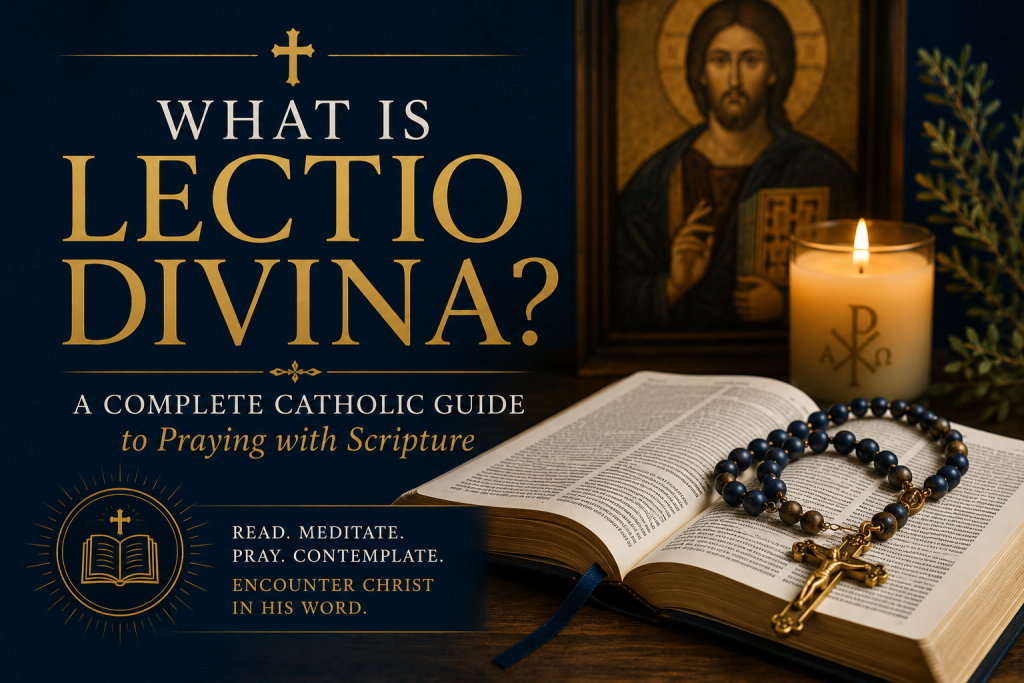
What Is Lectio Divina? A Complete Catholic Guide to Praying with Scripture
Introduction
For many Catholics, reading the Bible can sometimes feel intimidating. The Scriptures contain profound truths, beautiful stories, and timeless wisdom, but many people struggle to know where to begin. Some read the Bible as they would any other book, moving quickly through chapters without taking time to reflect. Others feel overwhelmed by passages they do not understand and eventually give up altogether.
The Catholic tradition offers a different approach—one that transforms Scripture from a book to be studied into a conversation with God. This approach is known as Lectio Divina, which means “Divine Reading” in Latin.
For centuries, saints, monks, priests, and ordinary believers have practiced Lectio Divina as a way of encountering Christ through Sacred Scripture. Rather than focusing solely on information, Lectio Divina invites Catholics to listen for God’s voice, reflect on His Word, respond in prayer, and rest in His presence.
In today’s fast-paced world, where distractions are everywhere and silence is increasingly rare, Lectio Divina provides a simple yet powerful way to deepen your relationship with God. Whether you are new to Scripture or have been reading the Bible for years, this ancient practice can help you approach God’s Word with greater attentiveness, prayerfulness, and trust.
This guide will explain what Lectio Divina is, where it comes from, how it works, and how you can begin practicing it today. For a copy of the Lectio Divina please click the following link to be brought to Paulist Press to buy their Catholic Prayer Bible Lectio Divina Edition: Buy Here
Lectio Divina in 4 Simple Steps
- Read a short Scripture passage slowly.
- Reflect on what stands out.
- Respond to God in prayer.
- Rest quietly in His presence.
Even 10–15 minutes of Lectio Divina each day can help deepen your relationship with God and strengthen your prayer life.
What Is Lectio Divina?
Lectio Divina is an ancient Catholic method of praying with Scripture. It is not merely Bible study, nor is it simply reading a passage and moving on. Instead, it is a prayerful encounter with God’s Word that engages the mind, heart, and soul.
The goal of Lectio Divina is not to analyze Scripture academically but to allow God to speak personally through His Word. It invites the believer to slow down, listen carefully, and reflect on how God may be speaking through a particular passage.
Unlike modern approaches that often emphasize speed and productivity, Lectio Divina encourages patience. A single verse can provide enough material for deep reflection and prayer. Rather than asking, “How much did I read today?” the question becomes, “How is God speaking to me through this passage?”
The Church has long recognized the value of this practice. Pope Benedict XVI described Lectio Divina as a means of opening the treasure of God’s Word and fostering a genuine encounter with Christ.
The History of Lectio Divina
The roots of Lectio Divina extend back to the earliest centuries of Christianity. Early Christians regularly prayed with Scripture, seeing the Bible as a living means of communion with God.
The practice became especially associated with monastic communities. Monks dedicated themselves to prayer, work, and meditation on Scripture. Over time, a structured method emerged that helped believers engage the Bible prayerfully and systematically.
One of the most influential figures in the development of Lectio Divina was the Carthusian monk Guigo II in the twelfth century. He described four stages of spiritual reading that became the foundation of the practice:
- Reading
- Meditation
- Prayer
- Contemplation
These four stages continue to guide Catholics today.
For centuries, monasteries preserved and practiced Lectio Divina as a central part of spiritual life. In modern times, the Church has encouraged all Catholics—not just religious communities—to rediscover this ancient form of prayer.
Why Lectio Divina Matters Today
Modern life is noisy.
Phones vibrate constantly. Social media competes for attention. Many people feel rushed from morning until night. In such an environment, prayer can become another task rather than a meaningful encounter with God.
Lectio Divina offers a remedy.
By slowing down and focusing on a small portion of Scripture, believers create space for silence and reflection. Rather than consuming information, they learn to listen.
This practice helps Catholics:
- Develop a deeper relationship with God
- Understand Scripture more personally
- Improve concentration during prayer
- Grow in spiritual awareness
- Find peace amid life’s distractions
Lectio Divina reminds us that God is not silent. He continues to speak through His Word to those willing to listen.
If you would like to learn how to read the bible as a Catholic please follow this following guide: How to read the Bible as a Catholic
The Four Steps of Lectio Divina
The traditional practice of Lectio Divina follows four simple movements.
Step 1: Lectio (Reading)
The first step is reading.
Choose a short passage of Scripture. Read it slowly and attentively. Do not rush. Pay attention to words, phrases, or images that stand out.
This is not the time for analysis or interpretation. Simply read and listen.
You may find it helpful to read the passage several times.
Ask yourself:
- What words catch my attention?
- What seems important?
- What is happening in this passage?
The goal is to receive the text rather than master it.
Step 2: Meditatio (Meditation)
After reading, begin reflecting on the passage.
Meditation involves pondering what God may be saying through His Word. Think about the passage and how it relates to your life.
Ask:
- What does this passage reveal about God?
- What is God inviting me to notice?
- How does this connect to my current circumstances?
This step allows Scripture to move from the page into the heart.
Step 3: Oratio (Prayer)
Next comes prayer.
Respond to God personally.
If the passage challenges you, ask for strength. If it brings comfort, offer thanks. If it reveals a need, bring that need before God.
This conversation may be formal or spontaneous.
The important thing is sincerity.
At this stage, Scripture becomes dialogue rather than simply reading.
Step 4: Contemplatio (Contemplation)
The final step is contemplation.
After speaking to God, simply rest in His presence.
There is no need for words.
Sit quietly.
Allow God’s love to fill your heart.
This is often the most difficult step because modern life trains us to be constantly active. Yet contemplation reminds us that prayer is ultimately about being with God. Think about this step as a form of meditation, and reflect on how resting in God’s love and presence can release the busy stresses of life we all deal with.
Choosing Scripture for Lectio Divina
Almost any passage of Scripture can be used, but beginners often find the Gospels especially helpful.
Good starting points include:
The Beatitudes
Matthew 5:1–12
The Good Shepherd
John 10:1–18
The Prodigal Son
Luke 15:11–32
The Annunciation
Luke 1:26–38
The Sermon on the Mount
Matthew 5–7
The daily Mass readings are also excellent choices. You can learn how to pray daily with this following guide routine: How to Pray Every Day
Common Mistakes to Avoid
Reading Too Much
Lectio Divina is about depth, not quantity.
A few verses are often more fruitful than several chapters.
Treating It Like Bible Study
Bible study is valuable, but Lectio Divina has a different purpose.
The focus is prayer and encounter rather than analysis.
Expecting Immediate Results
Spiritual growth takes time.
Some sessions will feel profound. Others may feel ordinary.
Remain faithful.
Rushing Through the Steps
Slow down.
God often speaks in silence and stillness.
Lectio Divina and the Saints
Many saints practiced forms of Lectio Divina throughout their lives.
St. Benedict
The Rule of St. Benedict placed Scripture at the center of monastic life.
St. Teresa of Ávila
She encouraged prayerful meditation on Scripture as a means of deepening intimacy with Christ.
St. John Paul II
He frequently encouraged Catholics to rediscover Scripture and prayer through practices like Lectio Divina.
Pope Benedict XVI
He described Lectio Divina as capable of opening the treasures of God’s Word and transforming spiritual life.
Their witness reminds us that this practice is not merely ancient—it remains relevant today.
Lectio Divina and the Rosary
While Lectio Divina and the Rosary are different forms of prayer, they complement one another beautifully.
The Rosary invites meditation on the mysteries of Christ’s life.
Lectio Divina invites meditation on the words of Scripture.
Together they create a rich spiritual rhythm.
For example, you might read the Annunciation passage through Lectio Divina before praying the Joyful Mysteries of the Rosary.
How to Begin Today
You do not need special training to begin Lectio Divina.
Start with:
- A Bible
- A quiet place
- Ten to fifteen minutes
Choose a short Gospel passage.
Read slowly.
Reflect prayerfully.
Respond honestly.
Rest quietly.
Repeat consistently.
Over time, you may discover that Scripture becomes more alive, prayer becomes more natural, and your relationship with God grows deeper.
Conclusion
Lectio Divina is one of the Church’s most beautiful and enduring traditions. It teaches us to approach Scripture not merely as readers but as disciples listening for the voice of Christ.
In a world filled with noise and distraction, this ancient practice offers a path toward silence, reflection, and spiritual renewal. By reading, meditating, praying, and contemplating, Catholics learn to encounter God through His Word in a deeply personal way.
Whether you are just beginning your spiritual journey or seeking to deepen an existing prayer life, Lectio Divina can become a powerful source of grace. Start with a few minutes each day, trust the process, and allow God’s Word to shape your heart.
Frequently Asked Questions About Lectio Divina
How long should Lectio Divina take?
Beginners can start with 10–15 minutes. Over time, many Catholics spend 20–30 minutes praying with Scripture.
Can I practice Lectio Divina every day?
Yes. Many Catholics incorporate Lectio Divina into their daily prayer routine and use the daily Mass readings as their Scripture passage.
What Bible translation is best for Lectio Divina?
Any approved Catholic Bible translation can work well, including the NABRE, RSV-CE, and NRSV-CE.
Is Lectio Divina the same as Bible study?
No. Bible study focuses on understanding Scripture academically, while Lectio Divina focuses on prayerfully listening to God through His Word.
Below is a quick video introduction on “What is Lectio Divina?” and how to begin practicing.